


A material pass through provides a dedicated route for moving items across a cleanroom boundary. A pass box, or pass-through chamber, provides that route through a cleanroom wall without using the personnel entrance for every transfer. The enclosed space and door sequence can reduce direct exchange between adjoining rooms. They do not make the outside of an incoming package clean. The useful question is not only which chamber to buy, but what must happen to the material before the receiving door opens.
Design the handover from the cleaner side backwards
Identify the condition in which the receiving operator needs the item: externally cleaned, unwrapped, protected inside another package, or subjected to a defined treatment. Decide where outer packaging is removed and how cleaned surfaces are protected from recontamination. Keep incoming goods, outgoing waste and used equipment from sharing an uncontrolled transfer sequence.
A practical routine identifies the sending side, the permitted load, the cleaning or preparation step, the door-close signal, any required recovery or treatment stage, and the receiving action. In sterile medicinal-product manufacture, material transfer belongs within the site's contamination-control strategy. Other industries may have different risks, but a written handover still makes responsibilities clear.
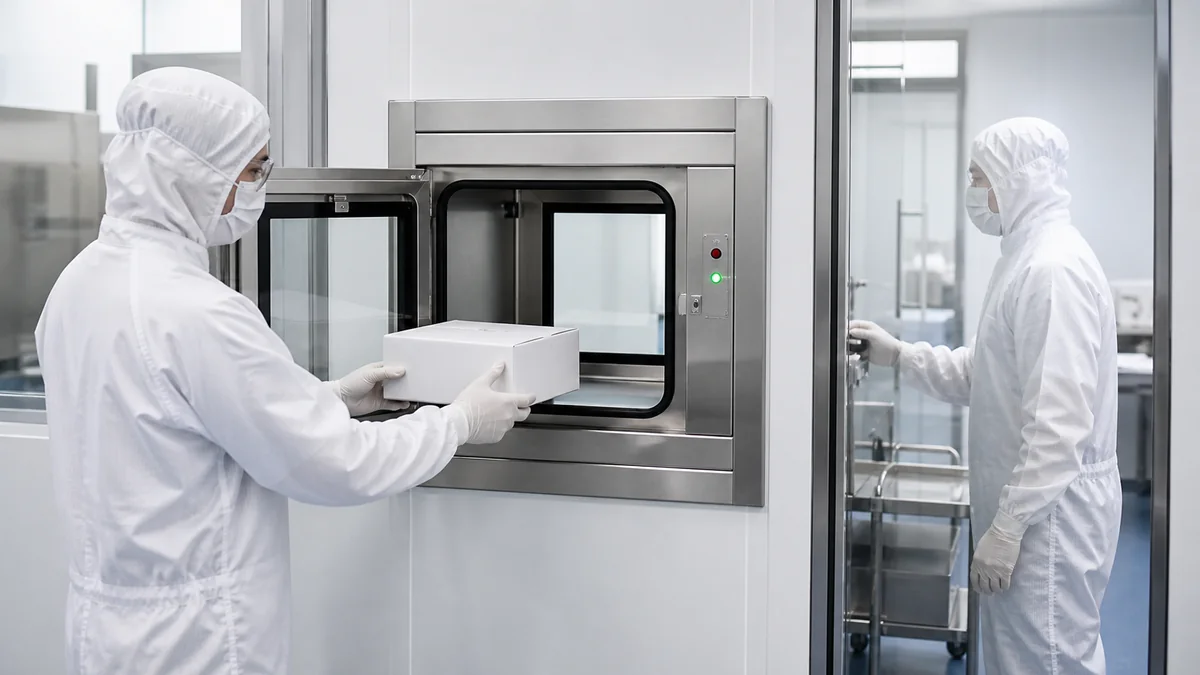
Static and dynamic solve different parts of the problem
A static cleanroom pass box provides an enclosed transfer space without an active air-cleaning system. It can be appropriate where the risk assessment and material-preparation procedure do not require filtered airflow inside the chamber. It still needs suitable seals, cleanable surfaces and controlled door use.
A HEPA-filtered dynamic pass box adds airflow that removes airborne particles from the chamber. Some designs recirculate air through a filter; others use a defined supply and discharge arrangement. These are not interchangeable descriptions. Internal recirculation alone does not establish a pressure difference to the adjoining rooms, and a HEPA filter does not sterilize the package surface.
A delay before the receiving door releases may support a demonstrated recovery process, but a timer setting is not proof that recovery occurred. Where clean-air recovery matters, assess it with representative loads and the intended door sequence. Specialized disinfection or sterilization requires a suitable, validated process with its own load limitations and safety controls; it should not be inferred from the term dynamic pass box.
Size for handling and airflow, not just for fitting the largest box
Allow room for gloved hands and a safe lift or slide, not merely the container's outside dimensions. In a filtered unit, a large load placed against a return grille can interfere with circulation. Shelves and trays also change the available space and can obstruct airflow. Test the proposed load arrangement before approving the chamber size.
For a cart transfer, examine wheel tracks, sill height, floor levels and the turning area on both sides. The chamber should not become a storage cupboard: stored materials may hide contamination, obstruct cleaning and prevent the next transfer from following the intended sequence.
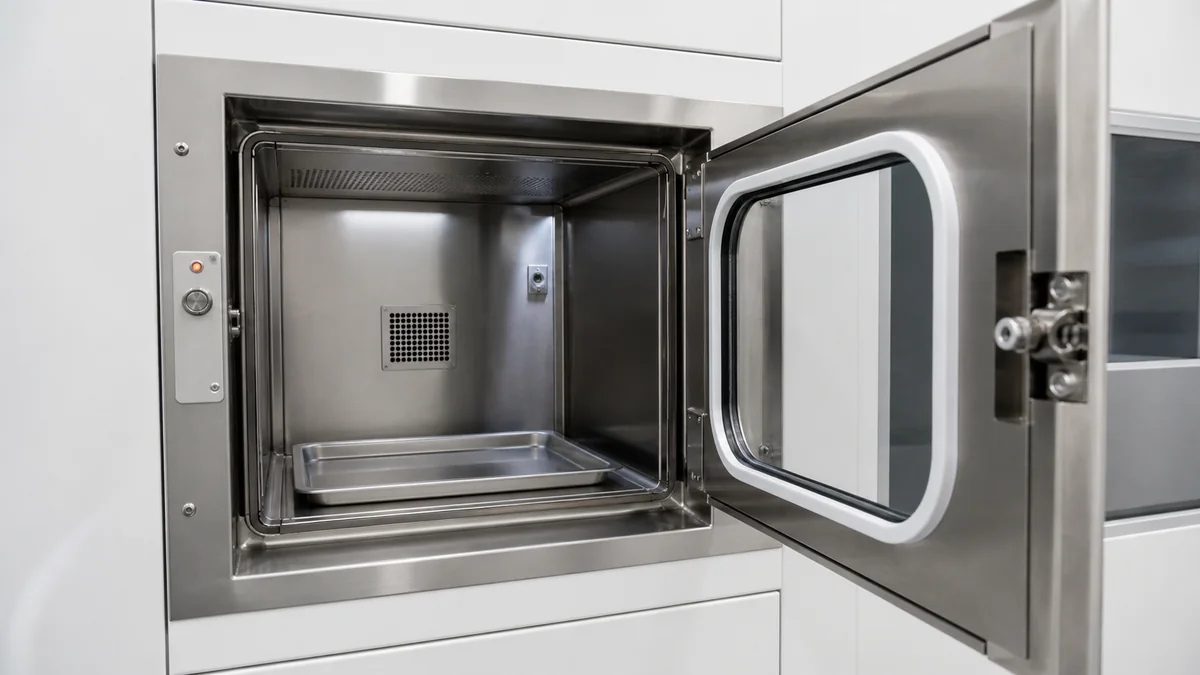
Check the wall interface and the finished installation
- Dimensions: distinguish clear usable chamber size, door opening, outside cabinet size and wall cut-out. Include door swing and service space.
- Support and sealing: provide support suitable for the unit and permitted load. Finish the wall perimeter without exposed gaps or difficult-to-clean ledges.
- Access logic: verify that both doors cannot normally be opened together and that indications, faults and override controls follow the approved sequence.
- Filtered versions: verify airflow, filter installation and any specified recovery or pressure behavior with the intended load arrangement.
After a door or seal repair, confirm closure and the transfer sequence again. If a filtered chamber takes longer to recover, investigate loading, blocked returns, filter condition and fan operation rather than merely extending the timer. Hazardous or biologically contained transfers require a separately assessed containment design; a general-purpose pass box must not be assumed to provide it.
Use the material-transfer equipment range to compare configurations once the load, preparation method and receiving condition are defined.