


A cleanroom air handling unit, or AHU, must respond to heat, moisture and airflow demands that do not necessarily rise and fall together. A room can reach its temperature setpoint while humidity remains high, or hold temperature and humidity while losing its intended pressure relationship. These are different control problems, even when one air-handling system supports all three.
Why correct temperature can coexist with excessive humidity
Cooling the air reduces its temperature. Removing water vapor requires an additional condition: part of the cooling-coil surface must be below the air's dew point so moisture condenses and can drain away. If the room has little sensible heat load, a thermostat may reduce cooling before enough moisture has been removed. This is a common part-load challenge when outdoor air or the process continues to introduce moisture.
Reheat can raise the temperature of already dehumidified air so that moisture removal does not overcool the room. Reheating alone does not remove water vapor. Relative humidity also changes with temperature, so a change in the displayed percentage is not always evidence that the moisture content changed. Where very low moisture levels matter, specify the required dew point and evaluate the appropriate dehumidification arrangement rather than assuming ordinary cooling will achieve it.
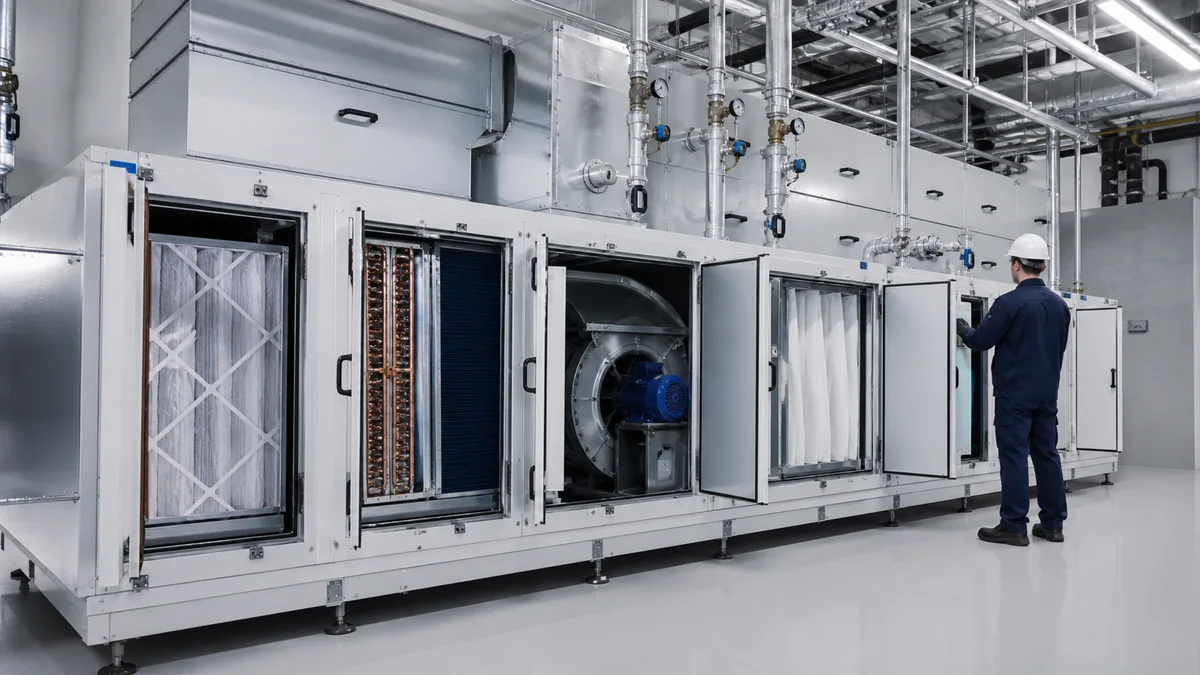
Separate recirculation from makeup-air duty
Air recirculated through cleanroom filters supports particle control and may also remove process heat. Outdoor or makeup air replaces air exhausted from the facility and supports ventilation and pressurization. These duties may be handled in one system or divided between units. A large recirculation volume is not evidence that enough makeup air is available for a new extraction system.
The load schedule should distinguish equipment heat, people, lighting, outdoor conditions, moisture release and process exhaust. Include operating combinations, not just a single total. A process that changes exhaust volume while its heat load stays nearly constant can affect room pressure without creating an obvious temperature change.
Pressure is the result of airflow and the room envelope
With doors closed, the balance among supply, return and exhaust determines the air available to move through the room's leakage paths. The same flow imbalance can produce different pressures in a tightly sealed room and a leaky one. Positive pressure is commonly used for product protection; containment applications can require a different airflow direction and a separate safety assessment.
A door opening temporarily changes the leakage area. A control strategy must distinguish the expected transient from a persistent fault and recover without unstable hunting. If pressure changes when an exhaust hood starts, check the airflow balance and control sequence. If it changes after door maintenance, check closure and seals. Raising a pressure setpoint is not a substitute for finding the cause.
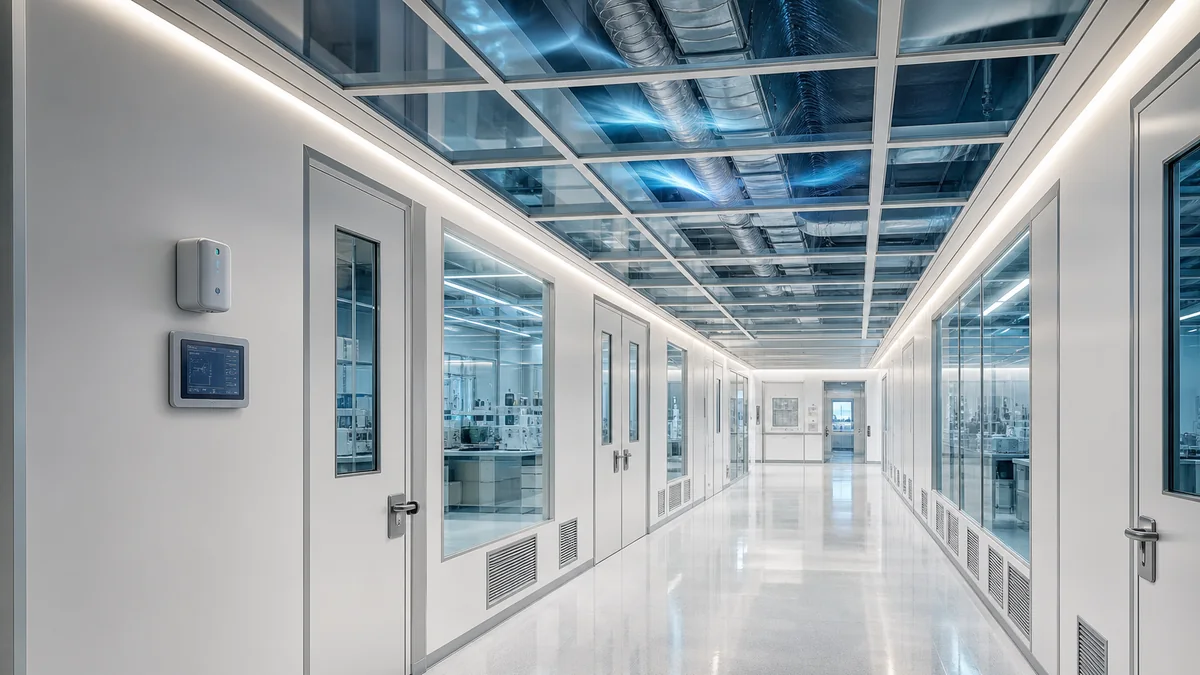
Make the system serviceable before it is enclosed
Provide access to filters, coils, fans, dampers, sensors and condensate components. Check that a filter or coil can actually be withdrawn past surrounding pipework. Drainage arrangements must suit the pressure at the drain pan and the equipment instructions. Cold surfaces, damaged insulation and discontinuous vapor barriers can create condensation even when the room sensor reports acceptable conditions.
Demonstrate control through changing conditions
- Verify sensor calibration, locations and the pressure reference. A sensor exposed to a supply jet may not represent the room.
- Measure and balance supply, return and exhaust under the agreed operating states, with the intended filter configuration installed.
- Trend temperature, humidity and differential pressure together while checking representative process loads, exhaust changes and normal door use.
- Test the specified alarms, fan-failure responses and restart sequence, then retain the accepted settings and baseline records.
State required ranges, tolerances and recovery expectations separately for each parameter. The useful selection package for cleanroom HVAC equipment includes the room loads and airflow schedule alongside the control and monitoring requirements. An AHU capacity figure alone cannot describe the performance of the finished room.