


A laminar flow clean room may contain a local unidirectional work zone or use a more extensive supply-and-return arrangement. The room boundary and the protected process footprint are different design questions. The discussion below explains how to preserve the filtered-air path at the exposed work, without assuming that a single hood makes the entire room unidirectional.
Laminar flow equipment is used to supply filtered air across a local area where exposed products or components need protection from airborne particles. In cleanroom practice, the important objective is a sufficiently uniform, unidirectional airflow path through the critical work zone. That path must still function when tools, equipment and the operator are present; an empty hood with a running fan is only the starting condition.
First decide what needs protection
A general-purpose clean bench or open clean-air canopy is intended for product protection. It is not a biosafety cabinet or a chemical fume hood, and should not be used as the containment control for hazardous biological materials, toxic powders or harmful vapors. Changing from horizontal to vertical flow does not remove this limitation. If operator or environmental protection is needed, select a purpose-designed system through the relevant hazard assessment.

Protect the route between the filter and the critical point
First air means filtered air reaching a critical surface without first passing over something that could contaminate it. A hand held directly above an exposed item in a downward-flow zone can interrupt that route. In horizontal flow, a large container between the rear filter and another component can shield the downstream component. The problem is the placement of the obstacle, not simply its cleanliness.
Map the actual exposed surfaces: an open container, a component face or the point where two parts are joined. Then consider loading, manipulation and unloading. Items that are harmless while parked may block the clean-air path when lifted, turned or passed across the work zone. Arrange work so the critical point remains upstream of avoidable contamination sources.
Vertical and horizontal flow create different constraints
In a vertical laminar flow clean bench, air approaches from above. This can suit layouts with equipment distributed across a bench, but overhead objects and hands can shadow the work. The air must turn or pass through a designed outlet when it reaches the work surface. Perforations may help the air path in some designs, while creating handling difficulties for liquids or small parts.
In a horizontal laminar flow clean bench, air normally travels from the rear filter towards the front opening. This places particular importance on keeping large equipment out of the path to downstream work. Check the extra rear depth and access required for the fan or filter. Air discharged towards the operator is another reason not to treat this arrangement as hazardous-material containment.
A ceiling canopy extends the same product-protection principle over larger equipment. Its nominal footprint is not automatically the protected working area: machine height, conveyors, thermal plumes and open sides can alter airflow at the process. Room supply jets, nearby doors and passing traffic also deserve attention.
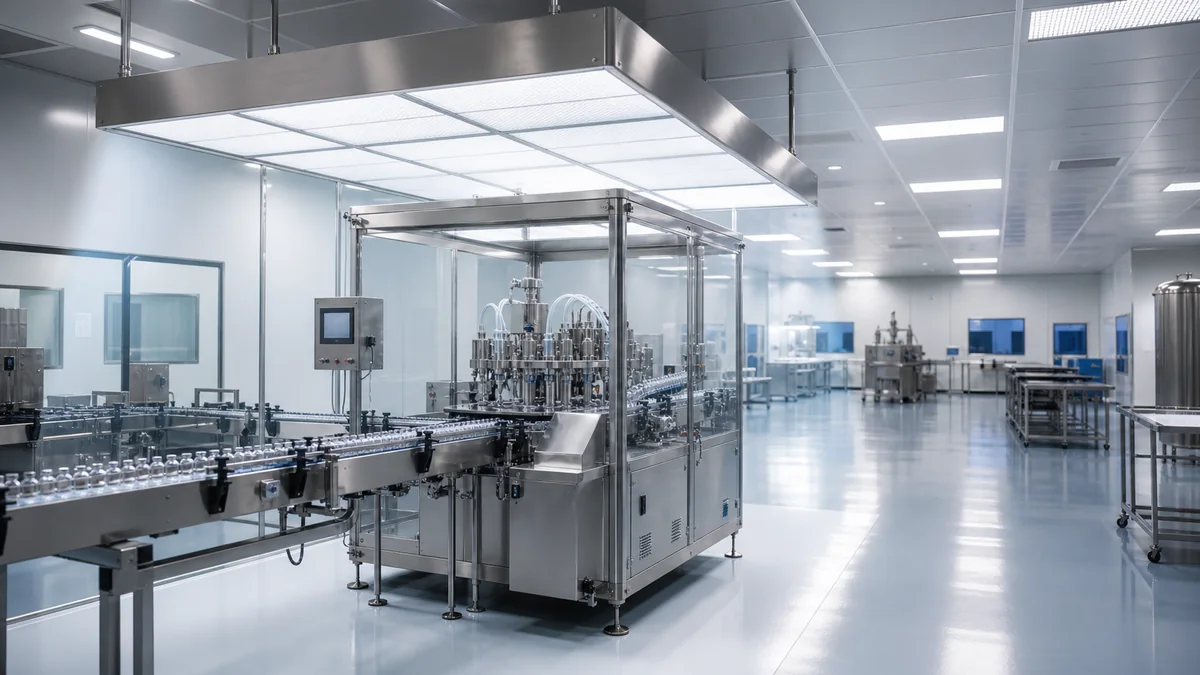
Review a representative operation before accepting the layout
- Define the critical working area and the intended cleanliness requirement.
- Load the permitted equipment and materials in their normal positions, including the largest relevant items.
- Assess airflow distribution and visualize the path around obstructions, with representative operator movements and interventions.
- Check the specified particle condition and installed-filter integrity separately; one test does not replace the others.
- Record the accepted layout, operating settings and restrictions so later changes can be reviewed against them.
For aseptic drug operations, dynamic airflow studies are an important part of demonstrating protection of the exposed process. Other applications should choose evidence proportionate to their contamination risk. Neither a filter-efficiency label nor one velocity reading proves protection throughout the work zone.
Keep the accepted air path intact during service
Follow the equipment instructions for startup, cleaning and safe filter replacement rather than borrowing a universal purge time. Do not touch or wipe the filter medium. Review the need for repeat testing after relocation, filter work or a significant layout change. Before selecting from the laminar-flow and containment equipment range, state the intended protection type and process layout so that unlike equipment is not compared as if it served the same purpose.