 日本語
日本語 ドイツ人。
ドイツ人。 アラビア語:アラビア語
 フランス語で
 インドネシア語
 日本語で。流れ
 韓国語
韓国語 マレー語
マレー語 ポルトガル語
 ロシア語
ロシア語 スペイン語
スペイン語 タイ語
タイ語 トルコ語
トルコ語 ベトナム語
ベトナム語Maintenance beyond routine washing
Mechanical restoration addresses surface appearance without treating ordinary polish as an electrical repair. Use the specified method to preserve the floor's working surface.



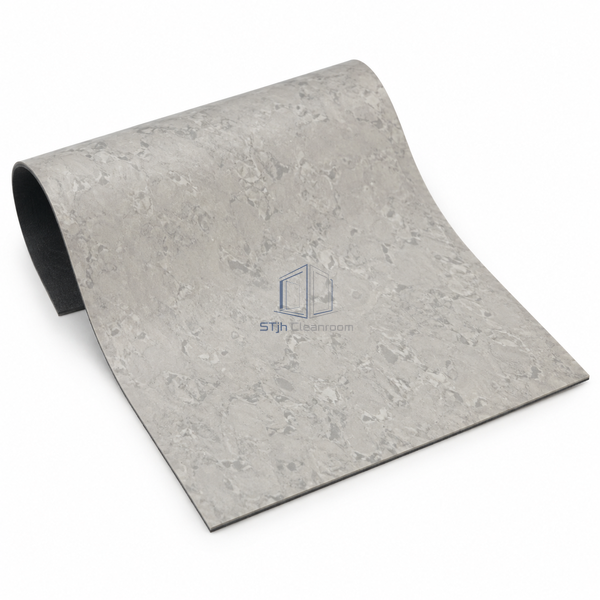
This configuration brings a dry-buff maintenance approach to a 2 mm Type I homogeneous dissipative floor. Its pressed body and conductive backing support an installed electrical pathway, while the surface can be maintained mechanically when traffic marks accumulate. It suits areas where static-control function must coexist with frequent trolley movement, routine cleaning and a long operating schedule.
Mechanical restoration addresses surface appearance without treating ordinary polish as an electrical repair. Use the specified method to preserve the floor's working surface.
The conductive backing links the wearing material to the installed earthing arrangement. Separate rooms and expansion breaks need properly planned continuity rather than assumed contact.
A compact non-foam body supports selection for busy laboratory approaches and clinical service routes, where soft cushioning is less important than controlled wheel movement.
| Material Grade | Type I homogeneous PVC |
|---|---|
| Manufacturing Form | Pressed sheet |
| Nominal Thickness | 2 mm |
| Electrical Function | Static dissipative |
| Resistance Selection | 10^6–10^8 Ω |
| Backing | Conductive backing layer |
| Surface Restoration | Mechanical dry buffing |
| Floor Installation | Bonded and grounded system |
| Traffic Profile | Frequent clinical and laboratory circulation |
| カスタマイズ | 意図したアプリケーションと動作環境に基づいて利用できます。 |
Suitable for hospital technical areas, clean laboratories and instrument routes that need dissipative flooring and an active restoration programme. Select footwear and cleaning tools alongside the floor. Use separate measurements for the installed resistance path and operator behaviour when the room's ESD controls require both, particularly after maintenance or local repairs.
Introduce the supported dry-buff restoration procedure while avoiding incompatible coatings that could alter surface electrical contact.
Consider wheel movement, stationary loads and maintenance access along with the specified dissipative range when planning the installation.
Choose the finish colour, compatible adhesive and grounding details. Provide maintenance staff with the restoration method and suitable machine-pad combination, and retain material for future electrically compatible patch repairs.
寸法、設置条件、性能目標、必要な表面仕上げをお送りください。