 Inglês
 Alemão
 Língua árabe
 Francês
 Língua indonésia
 Japonês
 Coreano
 Língua malaia
 Portuguêsatual
 Língua russa
 Espanhol
 Tailandês
 Língua turca
 Vietnã
Inherent material resilience
The rubber body provides a resilient walking surface without a separate acoustic cushion, making the floor build simpler where firm trolley support is also required.



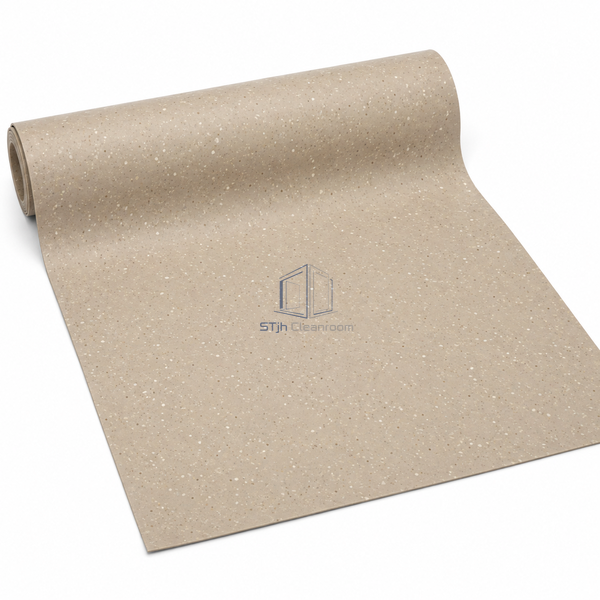
The HR20 construction uses dense homogeneous rubber in a 2 mm sheet without a foam cushion. Its resilience comes from the rubber body itself, while the compact section keeps the floor firm under circulation traffic. A 1.22 m roll width supports orderly installation through laboratories and pharmaceutical corridors. The material is selected for its rubber construction rather than a decorative vinyl wear film.
The rubber body provides a resilient walking surface without a separate acoustic cushion, making the floor build simpler where firm trolley support is also required.
The compact surface supports routine cleaning of laboratory dust and everyday traffic deposits. Suitable cleaning equipment should lift contamination without leaving sticky residues.
The roll format allows the installer to plan continuous runs around corridor corners and doorways while keeping individual sheet handling practical in constrained rooms.
| Material | Vulcanized homogeneous rubber |
|---|---|
| Nominal Thickness | 2 mm |
| Reference Roll Width | 1,220 mm |
| Cushion Backing | None |
| Hardness | Approximately 94 Shore A |
| Surface Form | Dense smooth rubber |
| Installation | Full-surface adhesive bonding |
| Wearing Section | Solid rubber through thickness |
| Intended Traffic | Laboratory and controlled-corridor circulation |
| Customização | Disponível com base na aplicação pretendida e no ambiente operacional. |
Use in laboratory circulation areas and pharmaceutical support corridors where a resilient compact floor is preferred. Match seam sealing to hygiene requirements and the manufacturer's rubber installation method. Chemical contact depends on the reagent and exposure time, so localized spill control remains necessary around dispensing and preparation stations.
Select the solid non-foam construction and ensure a firm, fully supported bond beneath the sheet.
Account for the 2 mm rubber and adhesive within the threshold detail, with substrate correction completed before laying the finish.
Select a standard rubber colour, compatible adhesive and perimeter treatment. Coordinate suitable joint sealing and maintenance pads with the rubber material rather than automatically using a vinyl welding or polishing procedure.
Envie-nos as suas dimensões, condições de instalação, metas de desempenho e acabamento de superfície necessário.