 EnglishCurrent
 德语
德语 阿拉伯语
阿拉伯语 法语
法语 印尼语
印尼语 日语
日语 韩语
韩语 马来语
马来语 葡萄牙语
葡萄牙语 俄语
俄语 西班牙语
西班牙语 泰语
泰语 土耳其语
土耳其语 越南语
越南语Deeper thermal buffer
The thick wearing body places more material between hot surface contact and the bond to the concrete, reducing abrupt heating at that interface.



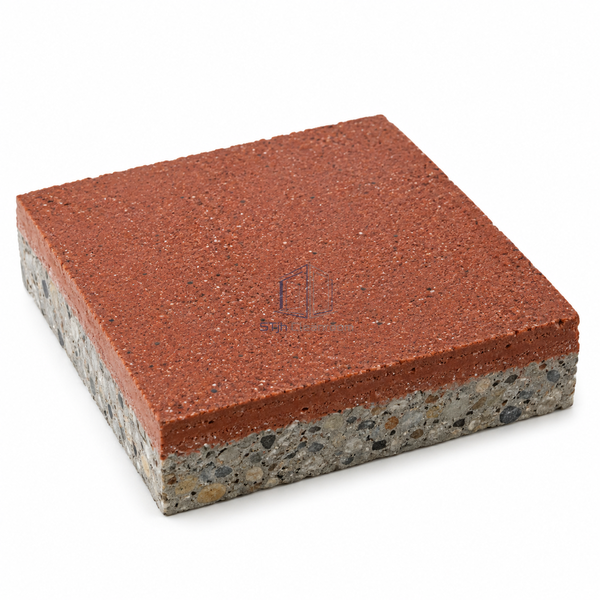
HT12 uses a nominal 12 mm trowelled polyurethane-cement body. The additional material depth helps shield the bond line from rapid temperature changes during hot liquid exposure and cleaning. This construction is materially deeper than the 4-6 mm smooth and broadcast floors. It is selected for severe process conditions, with the supporting slab, perimeter restraint and movement details treated as part of the thermal design.
The thick wearing body places more material between hot surface contact and the bond to the concrete, reducing abrupt heating at that interface.
Trowel application can follow designed falls and robust drain approaches, helping hot liquids leave the working surface.
Joints and perimeter terminations accommodate the movement associated with heated and cooled process areas instead of restraining it within one continuous slab.
| Material | Heavy-duty polyurethane-cement |
|---|---|
| Nominal Thickness | 12 mm |
| Placement | Trowelled screed |
| Body Structure | Dense mineral aggregate in hybrid binder |
| Hot-Service Reference | Up to 130 °C for the 12 mm construction |
| Occasional Spillage Reference | Up to 150 °C |
| Low-Temperature Reference | Down to -40 °C |
| Cleaning Duty | Full steam-cleaning configuration |
| Supporting Base | Sound concrete with thermal movement detailing |
| Customization | Available based on the intended application and operating environment. |
Suitable for hot-wash production zones, severe process spill locations and freezer interfaces. Temperature alone does not describe the exposure: spill volume, duration, cleaning frequency and the condition of the concrete affect system choice. The listed temperatures are construction reference values rather than an unconditional guarantee for every process.
Use the deep thermal-duty construction and include the actual discharge volume and duration in selection.
Detail the transition and movement joint so the wearing layer remains supported through the temperature change.
Choose the required surface texture, cove treatment and drain termination. Keep the complete 12 mm thickness at critical exposure points rather than feathering the floor into hot-discharge areas.
Send us your dimensions, installation conditions, performance targets and required surface finish.