 EnglishCurrent
 葡萄牙语
 西班牙语
 马来语
 印尼语
 德语
 土耳其语
 越南语
 法语
 俄语
 阿拉伯语
 泰语
 日语
 韩语
A defined clean-down location
The enclosure gives workwear treatment a designated place instead of distributing the task around a changing room.



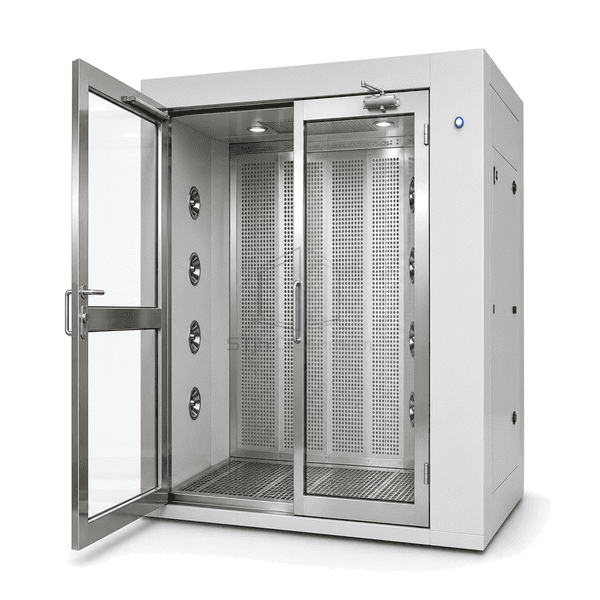
The personnel dust-removal cabinet provides a standing enclosure for a workwear clean-down station. Garment-directed outlets are arranged within the cabinet, while an extraction connection routes disturbed material toward a separate collection package. Formed metal panels, the personnel door and service access define the enclosure; casing material, outlet layout and filter arrangement can be selected for the installation. The cleaning-air supply and dust-collection circuit have different functions and must be specified together.
The enclosure gives workwear treatment a designated place instead of distributing the task around a changing room.
The extraction package can be selected for the material released from garments rather than using cleaning-air output as a measure of dust capture.
The collection compartment can be reached without using the occupied chamber as the filter-withdrawal route.
Casing finish and door details can be chosen for the surrounding housekeeping method and access route.
Workwear cleaning depends on the residue, the operator's routine and a working collection system.
Use these arrangements only for identified non-hazardous, non-combustible dry particles. Hazardous mineral or composite dust, reactive or combustible powders, chemical residues and biological contamination require a different, specifically qualified cleaning and containment solution.
These are common selectable construction and equipment references for personnel workwear cleaning cabinets. They describe configuration choices for ordinary non-hazardous, non-combustible dry particles, not measured performance or an as-built STjh equipment schedule.
| Equipment Format | Standing personnel enclosure with garment-directed air outlets and a dust-extraction connection |
|---|---|
| Cleaning-Air Option | Filtered, low-pressure blower-fed air |
| Casing Material Options | Powder-coated steel or galvanized steel; SUS 304 stainless steel alternative |
| Personnel Door Option | Hinged door with a viewing panel |
| Collection Package | Separate extraction blower, replaceable collection filters and dust receptacle |
| Filter Arrangement Option | Prefilter followed by a HEPA H14 extractor element |
| Electrical Supply References | 230 V AC, single-phase, 50 Hz; 400 V AC, three-phase, 50 Hz alternative |
| Cleaning Controls | Push-button start with a timed cleaning sequence |
| Extraction Run-On Option | Timed extraction after the cleaning-air cycle stops |
| Service Arrangement | Access to collection filters and the dust receptacle outside the occupied chamber |
| Customization | Available based on the intended application and operating environment. |
A usual selectable package combines a metal enclosure, blower-fed garment-cleaning air, dust extraction and accessible collection filters. Final-filter class, door details and control features are identified as individual selections. Ordinary compressed-air guns, explosion-protection claims and hazardous-dust capability are not included in this reference package.
The reference configuration is for ordinary non-hazardous, non-combustible dry particles. Identify the actual residue before selecting a cleaning method. Silica-bearing mineral dust, toxic powders, combustible dusts, hazardous fibres and biological contamination are outside this reference scope; a metal enclosure or a HEPA element alone does not establish suitability. This cabinet is not a substitute for required respiratory protection, garment laundering or a separately engineered decontamination process.
Use a personnel-cleaning air system selected for the task; do not substitute an unregulated shop-air gun or direct compressed air at the body. Establish where make-up air enters, where the cabinet extracts and where the collector discharges. The operating sequence should start extraction before garment blow-off and prevent cleaning when extraction is unavailable. Any run-on time is a control choice, not proof that the chamber is clear to open or that dust exposure has been eliminated.
Size the occupied space around workwear, footwear, turning movement and the door opening. Reserve separate space for collector installation, filter withdrawal and removal of collected debris. Keep the extraction face unobstructed, and determine the required electrical supply from the selected blower, collector and control package. Access outside the chamber does not make filter replacement dust-free; isolate the equipment and use the handling method appropriate to the collected material.
Position the clean-down point before the changing or shared area, without blocking the personnel route. An open fixed doorway blow-off portal is a different arrangement for a doorway treatment point; it does not provide the enclosed collection function specified for this cabinet.
Send us your dimensions, installation conditions, performance targets and required surface finish.